BlackmanVision Film Production When the lioness can tell her story, the hunter no longer controls the tale
BlackmanVision Film Production

BlackmanVision Film Production

Black film culture, QPOC filmmaking notes, Stud Life history, and independent film commentary from the BlackmanVision archive.

The Other Screen: Queer Visibility and Desire

The Other Screen: Queer Visibility and Desire

I keep thinking about what counts as “screen culture” now. Cinema is still my first love, but moving images have leaked into every corner of life: phones, timelines, webcams, and adult cams. We can pretend these spaces are separate from film culture, but they are not. They are all about who gets looked at, who gets paid, who gets shamed, and who gets to look back. Nuff said. People love to talk about representation when the work is respectable, funded, and sitting safely inside a festival brochure. The conversation gets much quieter when the image is sexual, messy, live, commercial, or made by people who are not asking permission from mainstream taste-makers. Funny that. This is where respectability ends and where the real fear of queer and trans visibility begins. I think about this most sharply around trans sex cams, because the same culture that consumes trans bodies often refuses trans people dignity, voice, craft or safety. That contradiction is not outside screen culture. It is right there in the middle of it.
Queering Black British Archives – #LGBTHM

Queering Black British Archives – #LGBTHM

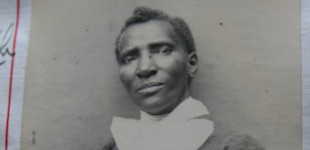
I was invited to give a workshop looking into the possible LGBTQI content in the Autograph Collection The Missing Chapter. This project is an archive of Black presence in photographs from the 1800s. This is an amazing project showing that Black people ie people of African descent were in the UK way before the Windrush landed in Tilbury in 1948.  In fact Black people have always been in Great Britain from Roman times till now. But what about Black LGBT presence in the history of the UK? This post is part of the presentation I gave with Ama Josephine Budge of Hysterical Feminisms at Autograph ABP. When looking at pictures of Black people in image archives we often assume heterosexuality and non-transgender presence because our education and culture is heterocentric and cis-centric. How can we decolonize our imaginations with such relentless dominant narratives? From a young age LGBTQ people are hypervigilant. It is part of our survival mechanism to try to access who is “safe”. We monitor micro-gestures, tone of voice, who looks at who for longer than is culturally acceptable, body language, and just something we might refer to vaguely as “energy”. We become experts in...

Why Nate Parker’s Birth of a Nation film is inspiring

Why Nate Parker’s Birth of a Nation film is inspiring

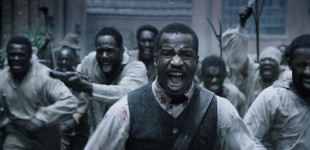
Some Black people feel there are too many movies made about the transatlantic slave trade. I disagree. I think there are not enough. We need more female-led slavery stories. We need more QPOC-led slavery stories. We need more slavery stories from the Caribbean, South America and West Africa. We haven’t begun to scratch the surface of slavery movies. Black people need to keep talking about slavery. We don’t discuss the transatlantic slave trade enough because I think as Black people, like all people who have been abused, we feel complicit in the abuse, and blame ourselves for our “weakness” or “shame”. So we squash discussions on slavery by saying it is “something we need to get over” or “we should forget”. We tell ourselves we need to move on from it,  even though we see the damage that slavery has done to all African descent people in the USA, Caribbean and South America and the legacy of racism in contemporary Western cultures. Joy Degruy Leary has defined this as Post Traumatic Slavery Syndrome. We look on this part of our history and feel humiliated, and some would prefer to fast rewind past the 400 years of horror, to a time when we were “Kings and...

#OscarsSoWhite  – Watch 100 films made by #POC

#OscarsSoWhite – Watch 100 films made by #POC

#AllWhiteOscar was a hashtag in 2015 because of the snubs to films made by and about People of Color (POC). The Oscar nominations have been announced, and again and history repeats itself with #OscarsSoWhite as the hashtag for 2016. My hope is that Chris Rock launches a blistering comedic routine when he hosts this years ceremony. How can we all be positive about this? We can do something that is in our control right now and watch films made by POC. We can protest AS WELL AS support filmmakers by watching the work when it comes to our cinemas. We can demand the films are shown in cinemas/Netflix/TV. We can demand the work is easy to access. We can also share the filmmakers’ work on social media rather than helping Hollywood market their mainstream films on social media, when they already have huge PR budgets and media exposure anyway. Follow filmmakers on social media and engage with them and their work. I made a quick list of feature length films both historical and contemporary, experimental and narrative, documentary and fiction. The list of POC filmmakers is intersectional and so includes women/men/and LGBTQ people. The films are not in any particular order of quality or...

5 Tips for Working with Actors

5 Tips for Working with Actors

People always ask me how I found working with actors on my film projects, in a way as if they are expecting horror stories. It gives me pause for thought as in popular imagination actors are assumed to unreasonable divas who make directors’ lives hell. This has not been my personal experience. But while I was training to be a filmmaker, I was on placements and I had the luxury of seeing many directors and their different approaches to actors. This is not going to be a tutorial on how to direct actors. There are many books and websites that deal with this very well. I am sharing some of the ways of being that have worked for me and are easy to implement on any film set. Actors are part of the creative team Actors are not pawns or robots for you to treat as objects on a film set.  They are creatives too. Many can offer interesting insights into the characters you have written and are directing. Think of your characters as having lines that you have coloured in with your imagination and back story, and the actors as providing shading to add texture. It’s OK to push actors out of their comfort zone Actors like all people have fears and blocks in their lives, There may be...

5 Things QPOC should know if they want to make a movie

5 Things QPOC should know if they want to make a movie

I decided to write this because I wanted to share my experiences of making an indie film as a Queer Person of Color (QPOC). I come from a strong story telling tradition belonging to the African Diaspora. We have an oral tradition in which we paint images and weave words to enthrall anyone who is willing to hear. So it is no coincidence that Hip Hop/Rap are dominant in the world right now. The cinema screen is really a giant campfire. We know that as QPOC we do not often see images of ourselves in mainstream cinema, independent cinema, LGBT cinema, television or any form of media  – in the universe –  to lift a portion from standard release forms. Yes, we are pretty much invisible, yet ironically we are more likely than “white” people to identify as LGBT. Go figure! In the UK here are the feature length films that have been made by QPOC, Young Soul Rebels by Isaac Julien which won the Critics Prize in Cannes in 1991, Nina’s Heavenly Delights by Pratibha Parmar in 2006, Kick Off Bashment and Fit in 2010, by Rikki Beadle Blair. (Rikki Beadle Blair also made a TV series in 1999 called Metrosexuality. ) Another film  made by a straight woman but with a QPOC storyline is...

In response to Spike Lee’s all male list of films every aspiring filmmaker should see

In response to Spike Lee’s all male list of films every aspiring filmmaker should see

Spike Lee is all up in the blogosphere at the moment because of the awesome Kickstarter campaign for his new film which received a $10,000 donation from Steven Soderbergh recently. Spike Lee’s list of films was fantastic yet immensely disappointing because of its all-male flava. Lists always suck since there will always be omissions but here is BlackmanVision’s list of films for aspiring filmmakers – because you should not just watch films made by people with the same body parts or sexual orientation as you. And if you are a fiction filmmaker you should look at documentaries and if you are a documentarian you should look at fiction too. And if you are all about the narrative, challenge yourself with experimental film. Not in any order of brilliance or preference and some do overlap with Spike Lee’s list too. The Battle of Algiers – (Gillo Pontecorvo 1966) Some Like it Hot – (Billy Wilder 1959) The Times of Harvey Milk – (Rob Epstein 1984) Rear Window – (Alfred Hitchcock 1954) Killer of Sheep – (Charles Burnett 1979) Do the Right Thing – (Spike Lee 1989) The Blues Brothers – (John Landis 1980) Shawshank Redemption – ( Frank Darabont 1994) Mi Vida Loca –...

Must see at the BFI London Film Festival

Must see at the BFI London Film Festival

My top three that you have to see and if you cannot see them at the BFI London Film Festival make sure you see them at the cinema or snag a DVD with your very last pennies. These are in no particular order because they are all amazing. Pariah – Stunning coming of age story about a middle class African American lesbian teenager. Dee Rees’ first feature shows a maturity and skill most of us take years to achieve. Book now to see Pariah. The Black Power Mixtape 1967-1975 – Powerful Swedish documentary using rare archive footage of the Black Power movements in the USA. White European filmmakers with an Afrocentric gaze! Whoa!  See The Black Power Mixtape 1967-1975 here. Weekend – sencond feature by Andrew Haigh (Greek Pete). One of THE best gay films ever made. There is one exquisite moment in the sex scene which makes it the most authentic I have ever seen in cinema. See Weekend here.

BlackmanVision’s 100 Film Power List

BlackmanVision’s 100 Film Power List

Instead of getting angry and doing nothing I am just writing this list in response to the laziest stoopidest film power list created by the Guardian. I guess they just sat around in their white office full of smug white people who are too lazy to look beyond their white picket fence. Yes pun intended. So here is the BlackmanVision 100 Film Power List in no particular order because we are not into competition and each person/organization has their own value and worth. Power is not just about money and box office, it is also about contributing to a wider important film culture and debate. And guess what?  In this list there are some white people!  Feel free to add more in the comments or disagree. Bring it On!! Horace Ové – The first black person to ever make a feature length movie – Pressure,  in the UK, he is still going strong Gurinder Chadha – one of the most commercially successful female directors in the UK, invented a catchprhrase – Bhaji on the Beach, Bend it Like Beckham, Bride and Prejudice Pratibha Parmar – award winning filmmaker of features and documentaries, the first lesbian of colour to make a feature film in the UK – Nina’s Heavenly Delights...

The Challenges of Casting a Genderqueer film

The Challenges of Casting a Genderqueer film

Boys Don’t Cry is one of my favorite films, for the story but primarily for the way Hilary Swank totally nailed the genderqueer character of Brandon Teena.  I am presently casting for Stud Life which also has a genderqueer female lead. It is dawning on me that I am in for the long haul. It took THREE YEARS before Hilary Swank was cast!! BTW Shane from the L-Word also auditioned for the role. According to Wikipedia. “Swank prepared for the role by dressing and living as a man for at least a month, including wrapping her chest in tension bandages and putting socks down the front of her pants in much the same way that Brandon Teena did. Her masquerade was so masterful that her neighbors believed that the young man (Swank in male character) coming and going from her home was Swank’s visiting brother.”  In the end the dedication earned her an Oscar. I put out the casting call a month ago and have received an overwhelming positive response from actors for every part EXCEPT that of  JJ – the Black 20-something stud lesbian. This raises some issues around who goes for parts, but who is actually out there to play certain roles. I don’t believe that you have to be...

Stud Life Movie – Casting Call

Stud Life Movie – Casting Call

STUD LIFE – CASTING CALL – LONDON ACTORS Mates b4 Muff Writer/Director: CampbellX Producers – Stella Nwimo & Nadya Kassam Stud Life is the new feature length film on queer street life in London written and directed by CampbellX. The film is a post-modern LGBT She’s Gotta Have It for the YouTube generation. Stud Life asks the perennial queer question, how do you choose between your lover and your best friend? Stud Life is filmed over 10 days in London. Please note Stud Life contains lesbian, gay male and transgender content and scenes of a sexual nature and is a lo-budget independent film shot on HD video. AUDITIONS Dates of auditions will be 19, 21 22 July 2010 in London. 22 July will be the call back day. DEADLINE 16TH JULY 17:00 HOURS CHARACTERS JJ – 20 something Black butch masculine female, often mistaken for a guy. Seb – JJ’s best friend and confidante and side-kick is a white ethnic 20 something emo gay man. Smack Jack – 20-something Anglo English posh boy. He is smitten by Seb, who takes no notice of him. Elle – 20-something lesbian hi-femme professional dominatrix. JJ falls for her but realises she is very hot to handle. Manchester Joe – 30 something...